
Whole-House Water Filtration
These two get sold interchangeably and they are not interchangeable. The distinction is most of the decision.
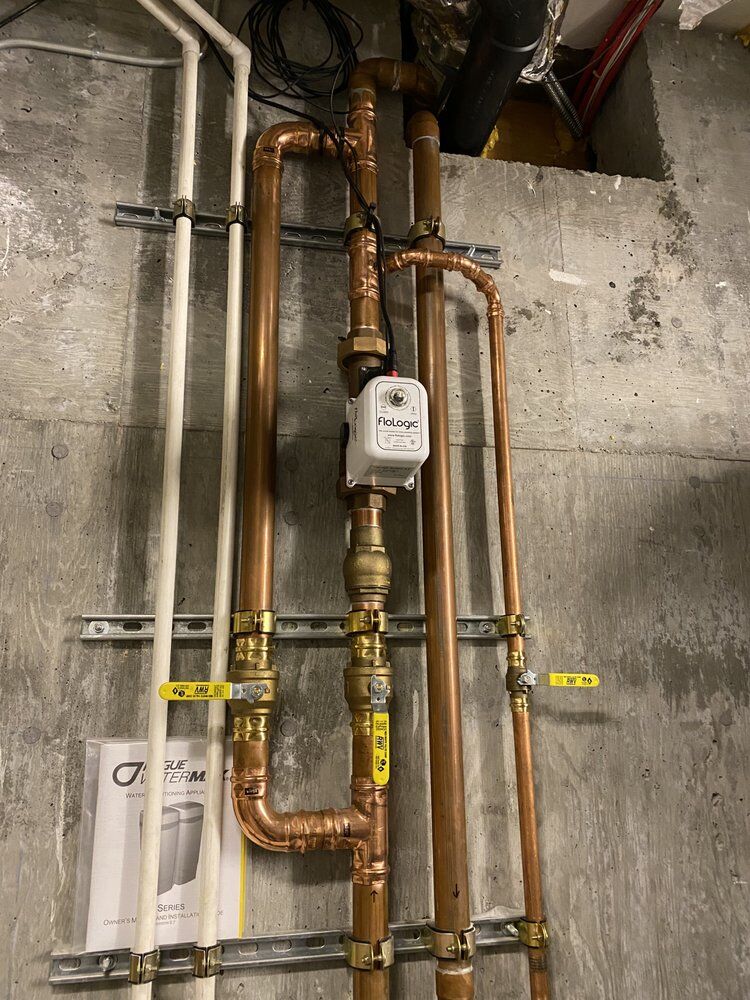
Filtration and softening solve different problems. A softener removes the hardness minerals that cause scale on fixtures and shorten water heater life. A filter addresses sediment, chlorine taste, and odour. If your complaint is white crust and soap that will not rinse, you want softening; if it is taste or smell, you want filtration.
Salinas Valley water is hard. That shows up as white scale on fixtures and shower glass, spotted dishes, soap that never quite rinses, and water heaters that lose efficiency earlier than they should. Softening, through ion exchange, is what addresses that specific set of symptoms.
Filtration is a different job. Sediment filters catch particulates, carbon addresses chlorine taste and odour, and specialised media target specific contaminants. None of that changes hardness, and a softener will not improve taste.
We start by asking which symptom actually bothers you and by testing the water at your tap rather than quoting a regional average. Sometimes the honest answer is a point-of-use filter at the kitchen sink rather than a whole-house system.
When this is likely your problem
- White crust on faucets, shower heads, and glass
- Soap and shampoo that never rinse clean
- Spotted dishes straight from the dishwasher
- A chlorine taste or smell at the tap
- Visible sediment or cloudy water
- A water heater scaling or noisy early in its life
What's included — and what isn't
Included in the quote
- Hardness and basic water testing at your tap
- A conversation about which symptom you are solving
- Assessment of install location, drain access, and power
- Installation of softener or filtration with a bypass valve
- Startup, programming to measured hardness, and a maintenance walkthrough
Quoted separately
- The equipment itself
- Electrical outlet installation where none exists
- Plumbing changes to create a treatment loop where none exists
- Ongoing salt and filter cartridge supply
- Laboratory water analysis and certification
- Descaling of appliances already affected
What drives the number
We quote after diagnosis, not before. These move the number most on this service:
- PROBLEMHardness, taste, or sediment — three different machines.
- LOOPWhether the house is already plumbed for treatment.
- HARDNESSYour measured hardness, which sets sizing and regeneration.
- LOCATIONDrain access, power, and space at the intended position.
Salinas note
Hardness varies across the Salinas Valley depending on supply, so a neighbour's system is not automatically the right size for you. Testing at your own tap takes a few minutes and is the difference between a correctly sized unit and one that regenerates too often or not enough.
Related
What the visit involves
Name the complaint
Scale, taste, or sediment. This question comes before any recommendation.
Test at your tap
Measured hardness, not a regional average.
Check the install position
Loop, drain, power, space.
Install and program
Bypass fitted, unit set to your water, and maintenance explained.
Questions about this service
Will a softener make my water taste better?
Generally no, and this is the most common misunderstanding. Softening removes hardness minerals, not chlorine or taste compounds. Some people find softened water tastes slightly different, occasionally slightly salty. If taste is the complaint, filtration is the answer.
Is softened water safe to drink?
For most people yes. Ion exchange adds a small amount of sodium, worth mentioning to your doctor if you are on a sodium-restricted diet. Many households add a separate drinking tap or an under-sink reverse osmosis unit for that reason.
Do salt-free conditioners work?
They work differently and the evidence is mixed. They do not remove hardness minerals; they change how the minerals crystallise, which can reduce scale deposits. They will not change how soap behaves, which is what most people actually want. We will tell you what each does rather than pushing one.
How much maintenance is involved?
A softener needs salt topped up and an occasional check that it is regenerating. Filters need cartridge changes on a schedule that depends on your water and usage. Neither is demanding, but neither is zero — a softener out of salt is doing nothing at all.
Ready to get this looked at?
Call and describe what's happening. You'll get an honest read before anyone drives out.